
Charts
No Handwashing Facility Within The Household Premises
Aditya Shankar M
05 November 2026
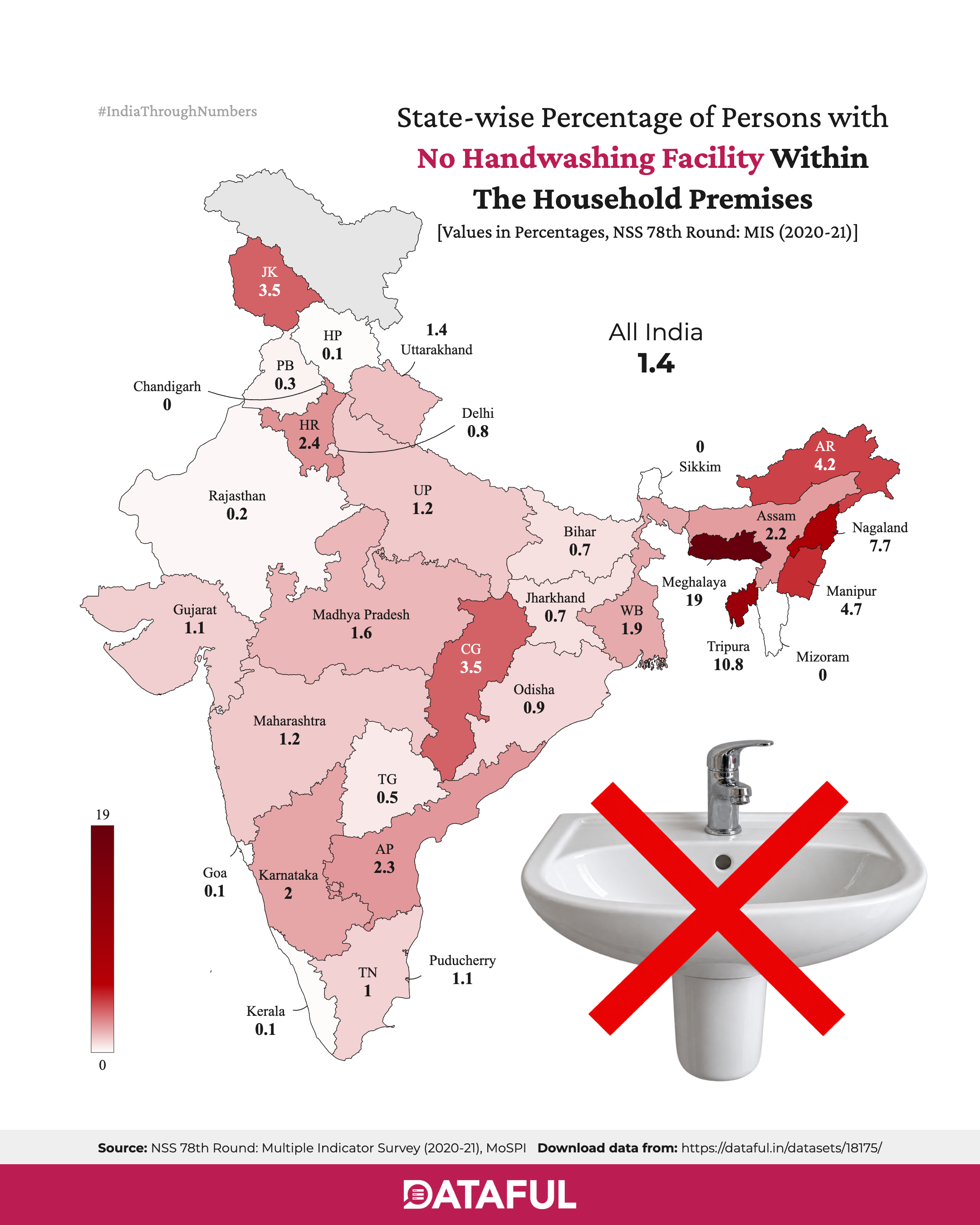
Access to basic hygiene infrastructure is a cornerstone of public health, yet significant regional disparities remain.
According to data from the National Sample Survey Office (NSS 78th Round: Multiple Indicator Survey, MoSPI), 1.4% of individuals across India lack a handwashing facility within their household premises. While this national average reflects substantial progress, a closer look at the map reveals sharp geographic contrasts:
Regional Disparities: The North-Eastern states report the highest percentages of households without on-premise handwashing infrastructure, led by Meghalaya (19.0%), Tripura (10.8%), and Nagaland (7.7%).
High-Performing States: Regions such as Chandigarh (0%), Sikkim (0%), Mizoram (0%), Kerala (0.1%), and Himachal Pradesh (0.1%) have achieved near-universal access.
The "Last Mile" Challenge: Large states like Chhattisgarh (3.5%), Jammu & Kashmir (3.5%), Haryana (2.4%), and Andhra Pradesh (2.3%) continue to face localized infrastructure gaps.
Achieving universal water, sanitation, and hygiene (WASH) targets under SDG 6 requires addressing these regional bottlenecks through targeted rural development and localized public health investments.
What policy interventions do you think are most critical to bridge the gap in these lagging regions?
Trusted by 65,000+ registered users
With over 18,000+ clean, standardized datasets across 50+ sectors, Dataful makes it easy for researchers, analysts, and curious minds to explore official data without the hassle.

